


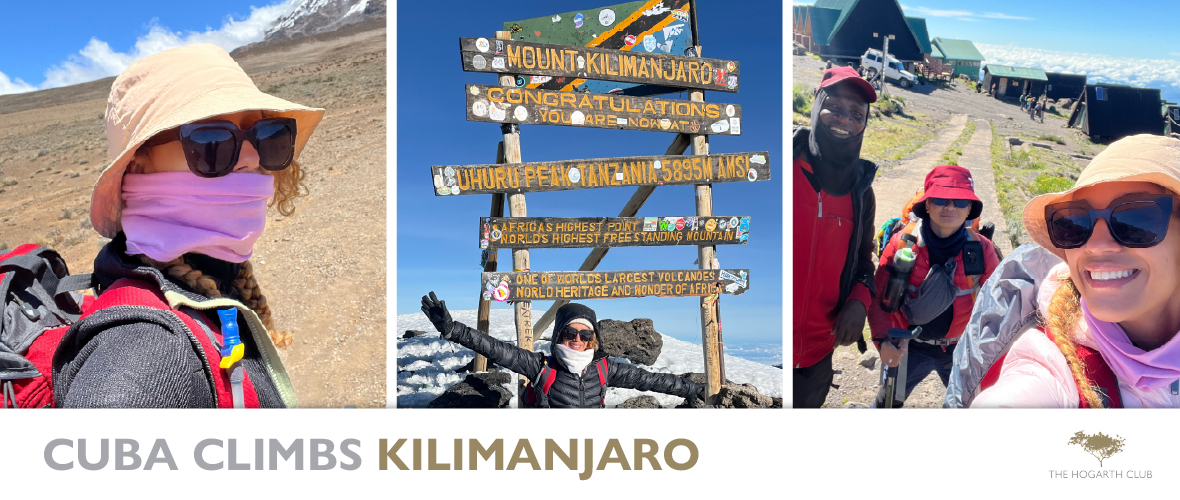
Climbing Kilimanjaro with Hogarth PT Cuba
We caught up with Hogarth PT Cuba Riggs, who recently took on the challenge of climbing Mount Kilimanjaro. We got to know what her training was like here at The Hogarth Club to what it was really like on summit day!
From Inspiration to Intention: Why Kilimanjaro?
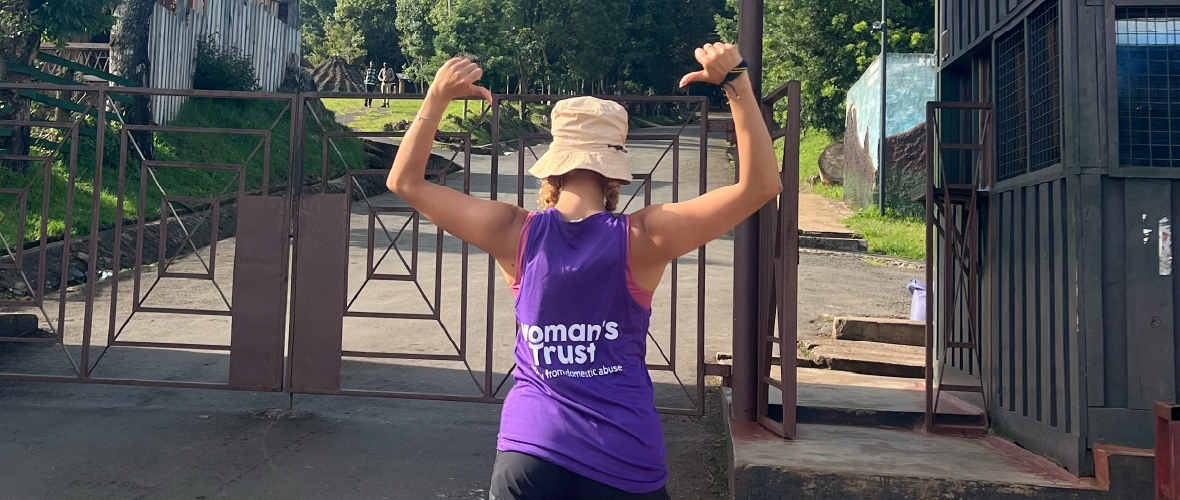
“I decided to climb Kilimanjaro because I had a friend volunteering in Tanzania who is aiming to complete the Seven Summits,” she explains, but the motivation goes deeper. “I have always had a love for the mountains, which ties into both my fitness and spirituality. I love how peaceful and serene they are. They take you away from the world and remind you what the Earth really is.”
For Cuba, that connection drew the desire to push further. “That is what drew me to it, alongside wanting to challenge myself. I also genuinely love walking and hiking, so it felt very aligned.”
“I also climbed Kilimanjaro in support of Women’s Trust, a small UK-based charity supporting women affected by domestic abuse through counselling and mental health support,” Cuba shares. “It is a charity I really love and have proudly supported through both fundraising and personal donations.”
Despite this connection, the climb itself was something entirely new. “I have never climbed a mountain from base to summit at that altitude”. While she has previously visited the Himalayas, those experiences were limited to driving and shorter walks. “I have never done a hike of this scale or duration, so this felt like my first real expedition.”
Training and Preparing for the Unknown
“I only specifically trained for Kilimanjaro about two to three weeks before the climb,” However, this was built on an already solid foundation. “I already had a consistent training routine in place, including full body strength, endurance, and yoga, so my body was already in a good position to take on the challenge.”
Her focus in the lead-up was mainly endurance training, "alongside strength and leg work to support long distance hiking. I incorporated incline walking, step work, and walking backwards on the treadmill to build strength and stability.”
Altitude, however, remained the unknown. “I was not able to fully prepare for altitude beforehand, but I did some breathwork, which I learned through yoga, to help with breathing control and staying calm.” On arrival in Africa, “I spent a few days at increasing altitudes...to help my body adjust.”
Interestingly, the training itself was not the hardest part “because it is already part of my lifestyle and I genuinely enjoy it,”. Instead, the uncertainty came from what could not be trained for. “The biggest challenge was the uncertainty around altitude.”
Ultimately, the biggest benefit of training was mental. “The training helped me mentally prepare more than anything. It allowed me to go into the climb knowing I needed to stay calm, focus on my breathing, and trust my body.”
First Impressions of the Mountain
“My first impression was just how beautiful it was. It felt very picturesque and almost mystical.”
What stood out most was the diversity of the landscape. "The different terrains were incredible. It started in rainforest with monkeys, then moved into a more open forest, then into a desert like landscape, and finally to glaciers at the top.”
Seeing the summit environment left a lasting impression. “Seeing the crater and the glaciers was unreal.”
Cold, Altitude, and Mental Strength
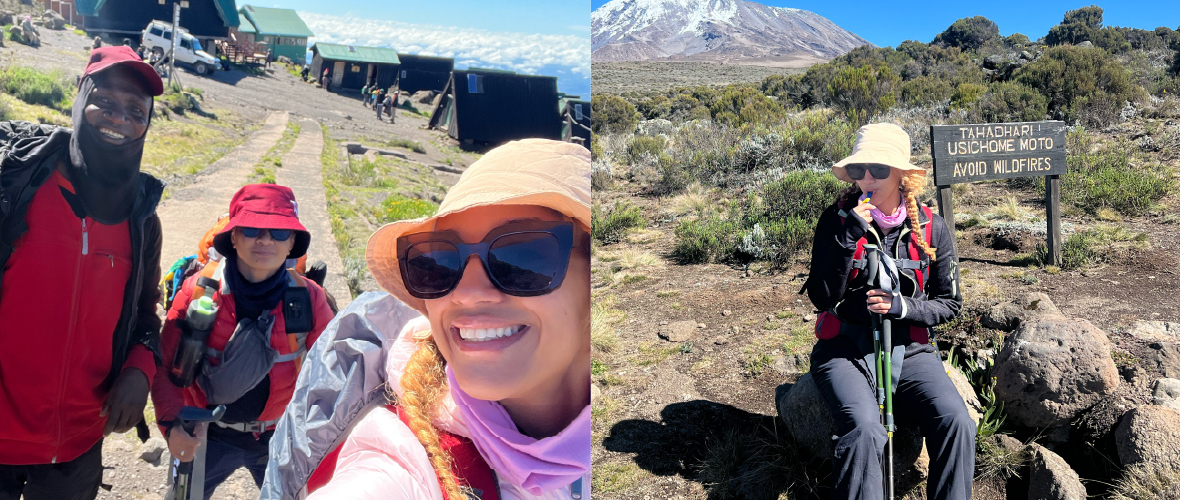
The climb was not without its challenges. “The most physically challenging moment was about an hour before the summit when I experienced altitude sickness and vomited,”. Perspective was key. “After that, I actually felt fine again. It is one of the symptoms, and it was about staying calm and reminding myself I was okay.”
Surprisingly, the harshest physical challenge was not the climb itself. “The hardest physical challenge overall was actually the cold. My toes felt like they were freezing to the point they might fall off.”
Support played a major role throughout the journey. “Having a good guide was very important. My guide was positive, supportive, and really motivating. We worked together as a team and pushed each other to keep going.”
Just like The Hogarth Club, community mattered and shaped the experience. “Everyone moves at different speeds and has their own journey. Some people went ahead, but my friends and I stayed together. It is about accepting that and supporting each other in the best way possible.”
Summit Day
Summit day began in the middle of the night "we woke up at midnight and started climbing in complete darkness with headlamps. It took around six hours to reach the summit.”
It was a surreal experience “You are climbing in the dark, stopping to eat, drink, and rest on the mountain. At some points you are almost crawling to get up certain sections. It is physically demanding, very cold, and mentally intense.”
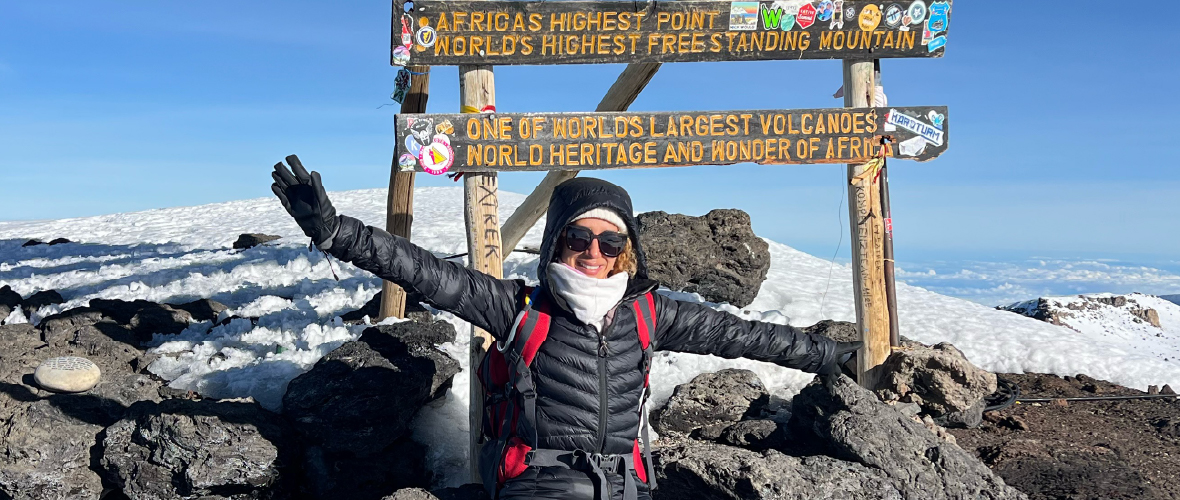
And then came the moment that made everything worth it. "...you see the sunrise. The horizon turns red, orange, and gold, and it is one of the most beautiful things I have ever seen.” That moment made it all worthwhile.
Reaching the summit exceeded expectations. “It was an incredible feeling and I felt very proud of myself, especially knowing I pushed through altitude challenges to get there.”
What the Mountain Teaches You (That Training Can’t)
Cuba's biggest lessons went beyond fitness. “What surprised me the most is how powerful it is to put yourself in new situations and move through fear, even without having everything perfectly planned.”
It reinforced something she incorporates within her training with members here at The Hogarth “Sometimes you just have to trust your body and trust the work you have been putting in over the years. When you do that, you realise how capable you actually are.”
There was also a sense of personal achievement. “It gave me a sense of completeness, knowing I was able to take on a challenge like that without over-preparing, and still feel strong, capable, and injury-free afterwards.”
And a key takeaway she now carries into her coaching: “Being able to enjoy a challenge while protecting your body was the biggest takeaway for me.”
At the same time, the experience was humbling. “It was not the physical side, but the altitude, which is something you cannot control.”
Strong Foundations: The Training That Really Mattered
“The most valuable parts of my training were leg strength, joint stability, and endurance.”
Simple, consistent movements played a key role. “Exercises like lunges really helped, along with general strength and endurance work to support my knees, especially for the downhill sections, which can put a lot of pressure on them.”
She also highlights the importance of stability and support work. “Walking backwards on the treadmill helped build stability, and back training helped with carrying a backpack without pain.”
Advice from the Summit: What You Need to Know Before You Go
Even with a successful climb, there is always room to refine. “If I did it again, I would include more altitude preparation. I would try to train in higher altitude environments beforehand, maybe in the UK or Europe, to help my body adapt better.”
Her advice for anyone considering Kilimanjaro: “I would say trust your body. If you are training consistently and you are fit and healthy, it is something you can do.”
But she is quick to point out that it is not just physical. "It is mental, emotional, and even spiritual.” Success comes from balance. “It is about pushing through fatigue, managing altitude, and not letting your ego take over.”
And most importantly: “Listen to your body. If you need to go down, acclimatise, and come back up, do that. It is about working with your body, not against it.”
Cuba's top three training tips:
• Strong Leg training
• Full body endurance
• Knee strength and joint stability
After the Climb
“Physically, I felt really good, just some muscle soreness but nothing major.”
Mentally, the impact was even greater. “I felt even better. I felt proud of myself for achieving something that was not even in my plans at the start of the year.”
The experience reinforced a mindset she now brings back into the gym. “It reminded me that when opportunities come up in life, you should take them. You have to move through fear and go for it; that is how you really live.”
The Next Challenge Is Already Calling
This experience has only strengthened her confidence in both herself and her approach to training. “It has made me trust myself and my body even more. It has reinforced my belief in how I train, how I fuel my body, and how I show up.”
And she is not stopping here. “Yes, definitely. I would love to do another climb in the future.”
She is already considering what comes next, from another mountain to a Hyrox event, a bodybuilding competition, or even a triathlon.
“I have not decided yet, but I know I want to take on another challenge before the end of the year.”
- - -
Inspired to Take on your Own Challenge?
If you have your own goals, whether that is building strength, improving endurance, or simply feeling more confident in your training, this is your sign to stay consistent and keep showing up.
As part of your membership, you can book your monthly personal training session with Cuba to check in, refine your training, and keep moving forward with purpose.
And if you are feeling inspired, there are more stories like this within the Hogarth community. Keep an eye out for other member journeys and follow the link below to find more.