



Hogarth Member Story - Johnny Moore: From Couch to Six Star Finisher
We spoke with Hogarth Member, Johnny Moore, who went from Couch to Six Star Finisher whilst raising funds for the National Youth Theatre.
Johnny has been a Hogarth member since 1997, and has gone from barely running five miles to completing all six World Marathon Majors which included a sub-3 hour marathon and his final star in Tokyo.
How did it feel crossing the finish line in Tokyo?
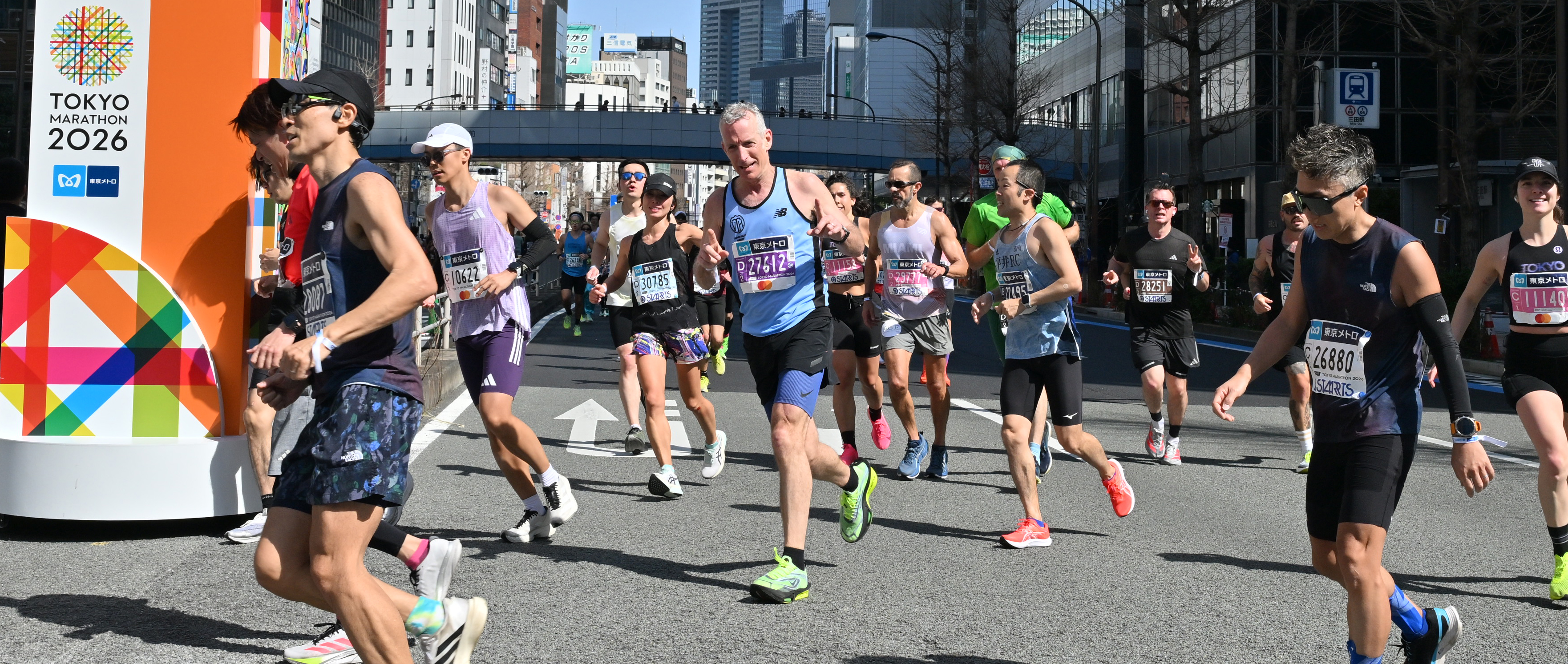
Crossing the finish line in Tokyo marked the end of a demanding journey for Johnny. As he puts it, "Tokyo was incredibly special, not because it was my fastest (it definitely wasn’t), but because it marked the end of a long journey."
The final stretch was far from easy, but that, in many ways, is the essence of marathon running. "The last six miles were a real struggle. But that’s kind of the point with marathons, you earn the finish," he explains. For Johnny, earning that sixth star was like closing a chapter, "A mix of relief, pride, and a bit of disbelief that I’d actually stuck with it all these years."

Where did it all begin?
Johnny’s marathon journey didn’t begin with a lifelong ambition, quite the opposite. It started, as he recalls, “slightly unwillingly.”
While serving on the board of The Project Trust, he found himself unexpectedly volunteering for a London Marathon place. “At that point, I hadn’t run more than five miles in my life,” he says. Faced with the challenge, he took a pragmatic approach: “I did what most people do when they’re completely out of their depth, I found someone who knew what they were doing.” That’s where Terry came in.
Early training - what was it really like?
What followed was a period of adjustment, discipline, and quiet persistence. Training quickly became something more than just preparation. “Strangely therapeutic. Time to myself. Not a lot of chat, just trying to get on with it,” Johnny says.
His routine became familiar: early mornings at The Hogarth, treadmill sessions he admits he “never loved,” and long runs along the Thames, through Richmond Park, and in the dark winter months with a head torch.
But it wasn’t without setbacks. Injuries became an early lesson in resilience. “I tore my calf and ended up hitching a lift home. That was a big lesson, understanding the difference between discomfort and actual injury.”
His first London Marathon proved equally challenging. “I went out too fast, got my fuelling wrong, and hit the wall at 20 miles,” he recalls. What he initially thought was a mental battle turned out to be physical. “I finished, but ended up in the medical tent, and in tears. The London Marathon is particularly emotional, the support, the pressure of raising money for a good cause.”
From first marathon to six stars
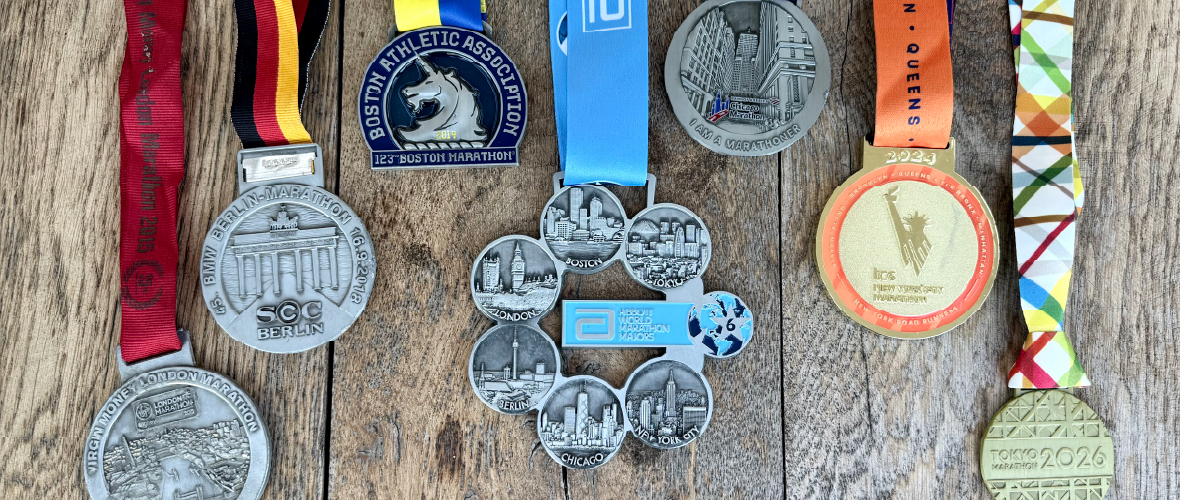
What started as a one-off challenge slowly turned into something bigger. Over 11 years, Johnny completed eight marathons:
• London (2015, 2016)
• Amsterdam (2017)
• Berlin (2018)
• Boston (2019)
• Chicago (2019 – PB 2:59)
• New York (2024)
• Tokyo (2026)
“And with Tokyo, I completed the Six World Marathon Majors - a bit of a life goal,” he says. The journey reflects a remarkable progression: “From struggling through my first marathon… to breaking three hours… to finishing all six.”
How did his training evolve?
Over time, Johnny’s approach to training has shifted significantly. What was once focused purely on mileage has become more balanced and considered. “It used to be all about mileage, 50–60 miles a week at peak,” he explains. “Now it’s about training smarter.”
Strength and conditioning now play a central role, alongside structured running sessions guided by Terry. “I do three strength & conditioning sessions a week… and Terry has me running intervals and plyometrics, as well as giving me ‘homework’ on hills, tempo runs and slow long runs.”
The results speak for themselves. “In my mid-50s, I’m stronger than I’ve ever been, just training smarter.” Crucially, he’s also embraced the importance of recovery: “Sleep, recovery, nutrition and managing stress are just as important as the running itself.”
The role of Hogarth and the community
Throughout it all, Hogarth has remained an integral part of this journey. For Johnny, it’s about far more than facilities. “It’s a really important part of the local community,” he says.
The early morning crew has become a defining part of the experience. “The 6am crew are a certain breed - it takes a level of insanity to train at that hour, but they’re a friendly bunch.”
It’s also become a place of shared habits and inspiration within his own family. “These days, I love seeing my two teenage boys in there training… They’re already better runners than me, but I like to think they’ve picked up a bit of discipline from watching their dad.”
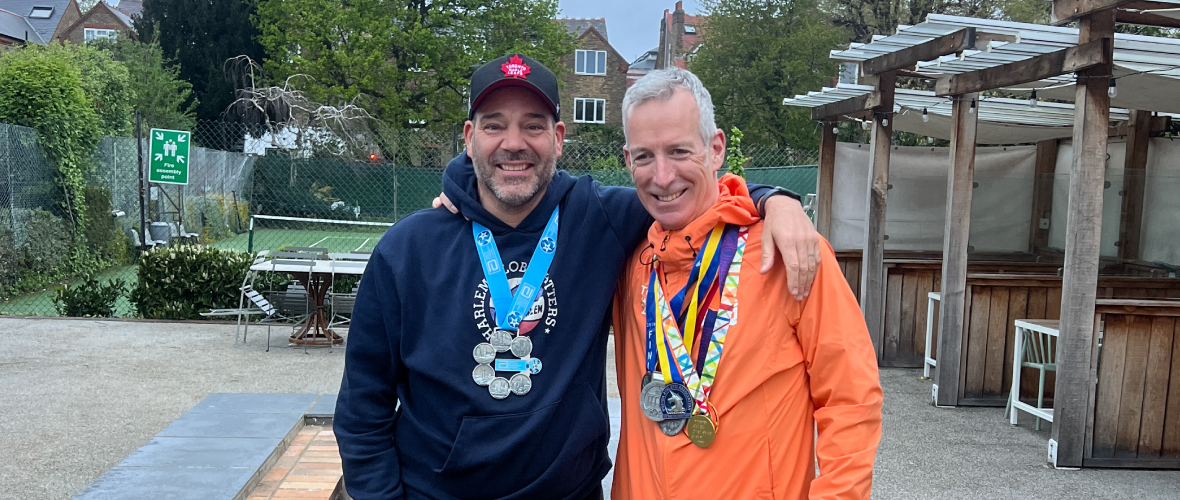
Working with Terry
The facilities are one thing, "but having a PT, even for a short period, can be a game changer." Johnny says.
Terry’s approach has been key to his development. “He knows exactly how to get the best out of me. When to push, when to hold back.” The focus, as Johnny describes it, is simple: “Quality over quantity. Technique over just banging out reps.” A philosophy neatly captured in Terry’s mantra: “Hurry slowly.”
Highlights (and lowlights!)
Reflecting on the journey, certain moments stand out for Johnny:
• Chicago — everything went right. PB of 2:59. Only needed “Plan A,” which never happens.
• Boston — incredible crowds, but those hills… Heartbreak Hill is very real.
• Tokyo — emotional, finishing the journey.
• Amsterdam — wrong shoes, bad nutrition… and I got overtaken by someone dressed as Jesus in sandals.
• London — hitting the wall… and coming to a grinding halt.
What has been the biggest challenge?
Injuries have been the most persistent obstacle in recent years. “I’ve had issues with my hips and pelvis,” Johnny explains, adding that one consultant even suggested he may have run New York with stress fractures.
A year before Tokyo, he was forced to stop running completely for three months. “Getting back required patience, rehab, and a lot of support,” he says, crediting both Terry and Chiswick Physio for helping him return.
Which would he want to run again?
“Chicago. No question.”
Is there a set order for the six majors?
Part of the appeal of the World Marathon Majors lies in its flexibility. “There’s no set order, and no strict time limit,” Johnny explains. “It becomes a long-term goal rather than a one-off challenge.”
Supporting National Youth Theatre
Alongside his final marathon, Johnny set out to give something back. “I raised £15,000 for the National Youth Theatre, a charity I’m proud to be a trustee of,” he says.
“They provide free pathways into the creative industries for young people who face financial and cultural barriers - making sure talent, not background, determines opportunity.” For Johnny, it was “the right way to mark the final marathon.”
If any member feels the urge to support this amazing cause, then please find the link here. the closing day for donations is 31st May 2026.
Johnny’s Top 5 Marathon Tips
Reflecting on everything he’s learned, Johnny offers a few key takeaways:
• Don’t neglect strength training - and you need more of it as you get older
• Variation is key - intervals, hills, tempo, and slow long runs (and slow means slow!)
• Get nutrition right - I’ve got this wrong before and paid for it
• Enjoy the process - even the tough sessions have their place
• Rest and recovery matter more than fancy shoes - although I do have a habit of collecting them
What’s next?
For now, the future remains open. “I’m not entirely sure,” Johnny admits. “Terry and I are still discussing, another marathon is tempting… or maybe shorter distances.”
One thing, however, is certain “I’ll still be part of the Hogarth 6am crew."